The Great Return: How American Industry Is Reclaiming Its Manufacturing Destiny
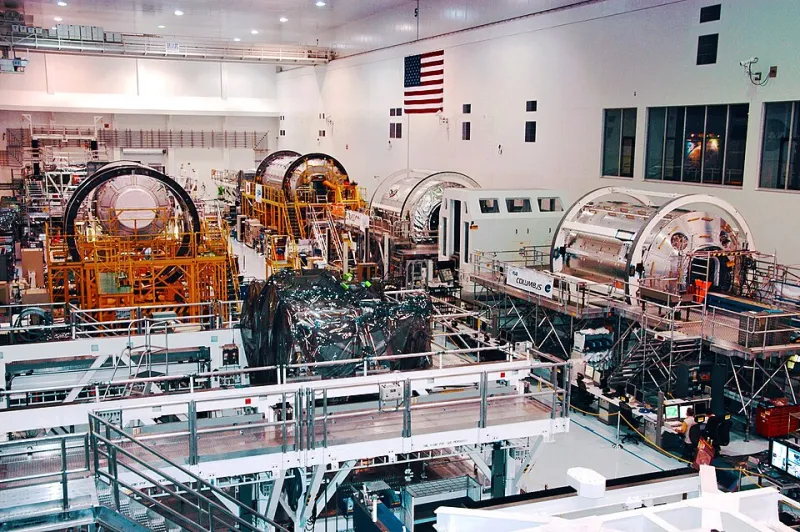
Photo: Creator:George Shelton NASA KSC, retouched and enhanced by John Chryslar, Public domain, via Wikimedia Commons
For much of the late twentieth century, the story of American manufacturing was one of quiet retreat. Factories shuttered. Communities hollowed out. The conventional wisdom held that cheap overseas labor had permanently claimed the industrial future. Today, that narrative is being forcefully rewritten.
Across the United States, a broad and accelerating reshoring movement is bringing production back to American soil — driven by a convergence of economic necessity, national security imperatives, and a renewed appreciation for the strategic value of domestic capability. The factory floor, long dismissed as a relic of a bygone era, is once again becoming a symbol of American ambition.
The Forces Driving Production Home
The return of manufacturing to the United States is not the product of sentiment alone. Hard economic calculations are reshaping corporate strategy at the highest levels.
Rising labor costs in China and Southeast Asia have steadily eroded the cost advantages that once made offshoring so attractive. Supply chain disruptions — laid bare with painful clarity during the COVID-19 pandemic — exposed the fragility of depending on distant suppliers for critical goods. When American hospitals struggled to source basic protective equipment and automakers sat on idle assembly lines waiting for semiconductor chips, the true cost of over-reliance on foreign production became impossible to ignore.
At the same time, advances in automation and robotics have fundamentally altered the labor cost equation. Modern American manufacturing facilities — equipped with precision robotics, artificial intelligence-driven quality control, and advanced materials handling systems — can compete on unit cost with overseas producers while delivering superior quality and dramatically shorter lead times.
Federal policy has reinforced these market signals. The CHIPS and Science Act, the Inflation Reduction Act's domestic content provisions, and targeted tariff structures have collectively created a powerful incentive architecture for companies willing to invest in American production capacity.
Electronics and Semiconductors: A Strategic Imperative
No sector illustrates the reshoring imperative more vividly than semiconductor manufacturing. For decades, the United States ceded chip fabrication to Taiwan, South Korea, and Japan — a strategic vulnerability that became alarmingly apparent when the global chip shortage of 2021 and 2022 paralyzed automotive production and delayed consumer electronics shipments worldwide.
The response has been decisive. Intel has committed tens of billions of dollars to new fabrication facilities in Ohio and Arizona. Taiwan Semiconductor Manufacturing Company — the world's largest chip maker — is constructing a major plant outside Phoenix. Samsung Electronics is expanding its Texas footprint. These investments represent the largest wave of semiconductor capital expenditure on American soil in a generation.
The implications extend well beyond corporate balance sheets. A domestically anchored semiconductor supply chain reduces American dependence on a geopolitically volatile region and ensures that the chips powering everything from military systems to consumer smartphones are produced under conditions the United States can verify and control.
Textiles: A Southern Renaissance
The textile industry offers a different but equally compelling reshoring story. For decades, Southern mill towns bore the brunt of offshoring, as production migrated first to Mexico and then to Bangladesh, Vietnam, and Cambodia. The human cost was severe — entire communities built around the mill economy lost their economic anchor virtually overnight.
Today, a quiet renaissance is underway. Companies including American Knitting Mills and several performance-fabric manufacturers have returned operations to the Carolinas and Georgia, drawn by a combination of skilled regional labor, proximity to East Coast distribution networks, and growing consumer demand for products carrying a genuine "Made in USA" label.
The premium that American consumers — particularly in the defense, workwear, and outdoor recreation segments — are willing to pay for domestically produced textiles has proven sufficient to sustain viable production economics. The Berry Amendment, which mandates domestic sourcing for military clothing and equipment, has provided an additional and stable demand foundation.
Automotive Parts: Rebuilding the Supply Chain
The American automotive industry's supply chain is undergoing its most significant restructuring in decades. The near-collapse of North American vehicle production during the chip shortage prompted automakers and their Tier 1 suppliers to fundamentally reassess their geographic sourcing strategies.
General Motors, Ford, and Stellantis have all announced expanded domestic component sourcing programs. A growing number of parts manufacturers — particularly in the electric vehicle battery and drivetrain space — are establishing new facilities in Michigan, Ohio, Tennessee, and Kentucky. The transition to electric vehicles, rather than threatening American manufacturing employment, is creating new categories of production opportunity for communities with existing automotive workforce expertise.
The Human Dividend
Beyond corporate strategy and national security, the reshoring movement carries profound implications for American workers and the communities that depend on manufacturing employment.
Manufacturing jobs have historically offered working-class Americans a pathway to middle-class stability without requiring a four-year college degree. The erosion of that pathway over the past three decades contributed directly to the economic anxiety and community disintegration visible across the industrial Midwest and rural South.
The jobs returning to American factories today are, in many cases, better-compensated and more technically demanding than those that departed. Advanced manufacturing positions in semiconductor fabrication, precision machining, and battery production frequently offer wages well above the national median, along with benefits packages that reflect the competitive labor market conditions reshoring creates.
Vocational training programs — many developed in partnership between manufacturers, community colleges, and state workforce agencies — are preparing a new generation of American workers to fill these roles. The investment in human capital accompanying the return of physical production may prove to be the reshoring movement's most enduring legacy.
A Foundation for the Next American Century
The resurgence of domestic manufacturing is not merely a cyclical correction or a temporary response to supply chain disruption. It represents a structural realignment — a recognition, long overdue, that a nation's economic sovereignty and its productive capacity are inseparable.
America built its twentieth-century prosperity on an unparalleled industrial foundation. The decisions being made today — in boardrooms, in Congress, and on factory floors from Ohio to Arizona — will determine whether the twenty-first century belongs equally to American industry.
The evidence accumulating across sectors suggests that the answer is increasingly, and encouragingly, yes. The great return is underway. And for American workers, American communities, and the American economy, the timing could not be more consequential.