Steady by Design: The American Executives Choosing Durability Over Dominance
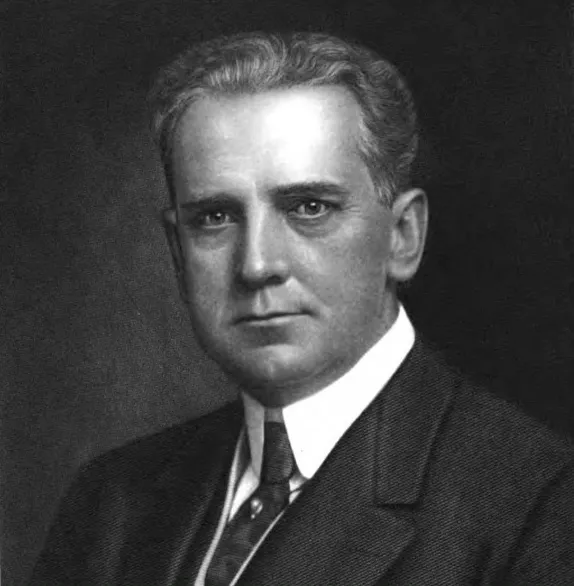
Photo: Samuel Atkins Eliot, editor. Massachusetts Biographical Society (Boston, MA)., Public domain, via Wikimedia Commons
For decades, the dominant narrative inside American boardrooms has followed a familiar arc: raise capital, accelerate growth, capture market share, and exit on favorable terms. The metrics of success were largely borrowed from Silicon Valley—valuation multiples, year-over-year revenue growth, and the eventual liquidity event that validated everything that came before it. That framework, for a specific and growing class of American business leader, is no longer compelling.
What is emerging in its place is something quieter, more deliberate, and arguably more aligned with the founding instincts of American enterprise: companies built to endure.
The Rejection of the Expansion Imperative
Consider the position of a mid-sized precision manufacturing firm in central Ohio that, over the past decade, has turned down no fewer than three acquisition offers from private equity groups. Each offer arrived with a premium valuation. Each was declined. The company's founder, who employs roughly 200 workers and has operated profitably for seventeen consecutive years, has spoken publicly about his reasoning: he did not build his business to hand it to a fund with a five-year exit horizon.
His position is not born of sentimentality. It is rooted in a clear-eyed assessment of what growth-at-all-costs has historically produced—cultures hollowed out by restructuring, loyal employees displaced by efficiency mandates, and communities left to absorb the consequences of decisions made in distant offices. He chose a different calculus.
This pattern is repeating itself across industries and geographies. A specialty food producer in Vermont has capped its annual production volume despite sustained demand that could justify a significant expansion. A regional logistics company in Tennessee has maintained a strict policy against acquiring competitors, preferring organic growth it can manage without compromising service quality. A family-owned engineering consultancy in the Pacific Northwest recently declined a merger that would have doubled its revenue—and, by the founders' own estimate, tripled its complexity.
Profitable Restraint as a Strategic Position
The phrase "profitable stagnation" has begun circulating in certain business circles, though many of the leaders who practice it resist the term. They do not see themselves as stagnant. They see themselves as disciplined.
There is a meaningful distinction. Stagnation implies inertia—a failure to adapt or invest. What these companies are practicing is something closer to strategic containment: deliberate choices about where to grow, at what pace, and under what conditions. They continue to invest in equipment, in workforce development, in product quality. What they refuse to invest in is scale for its own sake.
The financial logic, counterintuitively, often holds. Companies that resist the pressure to expand aggressively tend to carry less debt, maintain higher margins on a per-unit basis, and retain experienced employees at rates that outpace industry averages. Customer relationships, built over years rather than acquired through rollup strategies, tend to be stickier and more profitable. The compounding effect of consistency, it turns out, is not trivial.
What Employees Gain When Executives Slow Down
Perhaps the most underappreciated dimension of this movement is its effect on the workforce. When a company is not perpetually chasing the next growth milestone, the internal culture tends to stabilize. Roles become clearer. Institutional knowledge accumulates rather than walking out the door with every round of restructuring. Employees are not perpetually bracing for the reorganization that inevitably follows a merger or a private equity takeover.
Several leaders operating in this mode have noted that their voluntary turnover rates are substantially below industry norms. In an era when workforce retention has become one of the most expensive problems facing American business, that advantage is not abstract—it translates directly into reduced recruitment costs, preserved operational expertise, and a workforce that trusts its leadership.
One CEO of a regional insurance brokerage in the Midwest put it plainly: when his employees understand that the company is not for sale and that their positions are not subject to the whims of an outside investor's portfolio strategy, they work differently. They invest in the company because the company has invested in them.
Is This a Movement or a Moment?
The honest answer is that it is too early to know with certainty. The growth-at-all-costs framework has deep institutional roots—in business school curricula, in the incentive structures of capital markets, in the cultural mythology of the American entrepreneur as someone who builds empires rather than enduring enterprises.
What is clear is that the conditions producing this countermovement are not temporary. Interest rates have made cheap capital less abundant. The reputational costs of high-profile corporate implosions—companies that scaled rapidly and collapsed spectacularly—have accumulated in the public consciousness. And a generation of workers who witnessed the human cost of relentless corporate optimization is now making its own decisions about where to work and, increasingly, how to lead.
There is also a patriotic dimension worth acknowledging. Many of the business leaders who have chosen durability over dominance speak explicitly about their obligations to the communities where they operate. They are not managing abstractions—they are managing enterprises embedded in specific American towns and cities, employing neighbors, sourcing from regional suppliers, and contributing to local tax bases. The decision to keep a company stable and locally rooted is, in their framing, a civic act as much as a business one.
The Longer Arc of American Enterprise
It is worth remembering that the growth-at-all-costs model is not the oldest tradition in American business—it is a relatively recent one, amplified by the venture capital ecosystem that matured in the final decades of the twentieth century. Before that, the dominant model of American enterprise was far closer to what these executives are now practicing: build something good, serve your customers honestly, take care of your people, and let the business sustain itself across generations.
That older tradition never disappeared. It simply became less visible as the louder narrative of disruption and hypergrowth consumed the headlines.
What the executives profiled in this emerging cohort may be demonstrating is not a departure from American business values but a return to them—a recalibration toward the kind of durable, community-anchored enterprise that built this country's economic foundation long before anyone coined the term "unicorn."
The rebellion, as it turns out, may be less of a rebellion than a remembering.