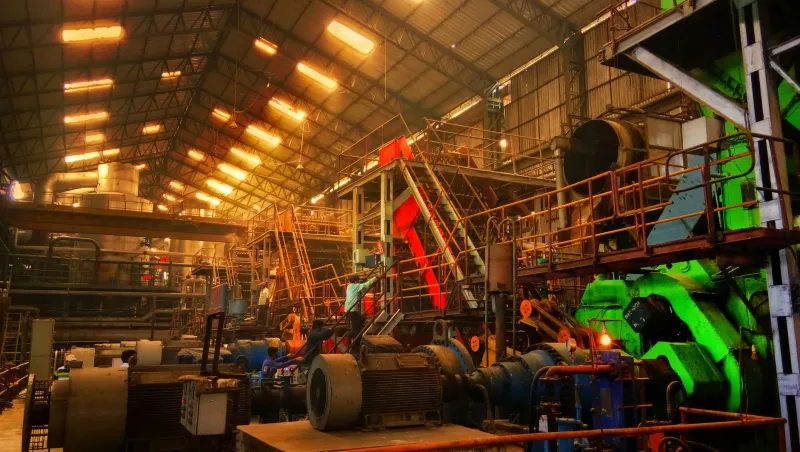
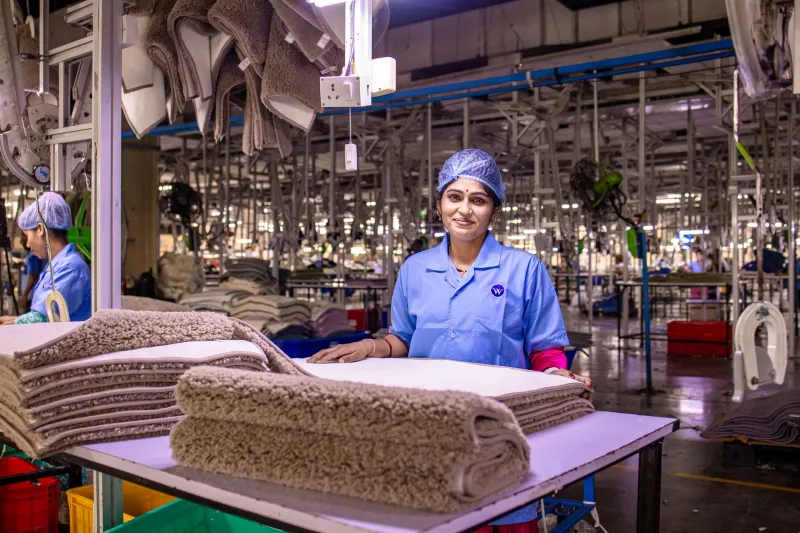
The Stockpile Advantage: Why American Manufacturers Are Deliberately Building What Others Call Waste
For the better part of four decades, the gospel of American manufacturing was written in the language of efficiency. Consultants arrived with clipboards, executives attended seminars, and the message was always the same: eliminate excess, shorten lead times, and trust the global supply chain to deliver exactly what you need, precisely when you need it. Just-in-time manufacturing was not merely a logistics philosophy — it was a religion.
Then the world broke.
The disruptions of recent years — pandemic-era port congestion, semiconductor shortages that shuttered automobile plants, geopolitical tensions that exposed the fragility of single-source overseas suppliers — did not merely inconvenience American manufacturers. They revealed a structural vulnerability that decades of optimization had quietly embedded into the foundation of American industry. When the system worked, it looked like genius. When it failed, it looked like recklessness.
Now, a meaningful and growing cohort of American manufacturers is doing something that would have drawn ridicule in a 1990s business school classroom: they are deliberately building more inventory than they need, investing in redundant production capacity, and constructing supply chains with intentional slack. They are, in the language of their critics, being inefficient. And they are winning because of it.
The True Cost of Leanness
Just-in-time manufacturing was born in the Toyota production system and evangelized throughout American industry with genuine enthusiasm. The logic was sound on its face: holding inventory costs money, warehouse space is expensive, and capital tied up in raw materials is capital that cannot be invested elsewhere. Strip the fat, the consultants said, and your balance sheet will thank you.
What that framework consistently underweighted was the cost of failure. A lean system has almost no tolerance for disruption. When a single supplier in a single country experiences a production halt — whether from a natural disaster, a labor strike, a regulatory crackdown, or a geopolitical flashpoint — the ripple effect through a just-in-time supply chain is not a minor inconvenience. It is a full stop.
American manufacturers who lived through the supply chain crises of the early 2020s do not need a consultant to explain this to them. They watched finished goods pile up on factory floors, unable to ship, because a single component was unavailable. They watched customers walk to competitors. They watched years of carefully cultivated relationships fray under the pressure of broken promises.
The lesson was not subtle.
Strategic Redundancy as a Competitive Moat
The manufacturers now pushing back against just-in-time orthodoxy are not operating from sentiment or stubbornness. They are making a calculated business decision: the cost of carrying strategic reserves is lower than the cost of the disruptions those reserves prevent.
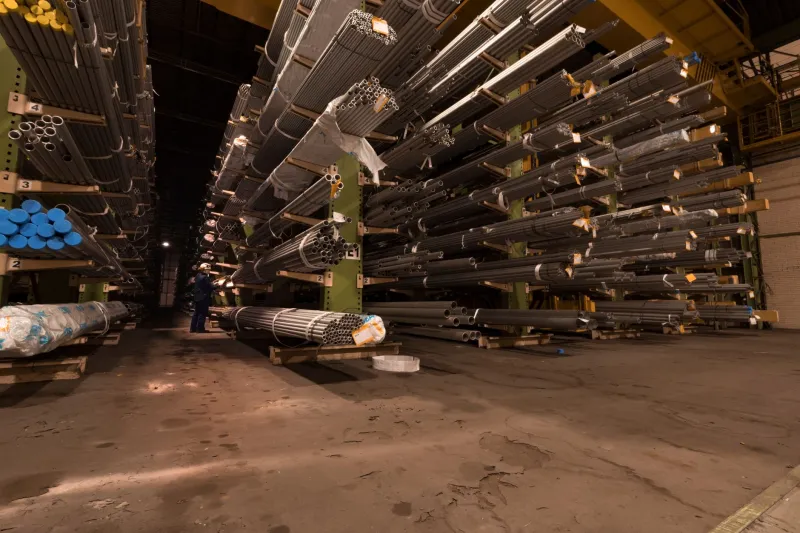
Consider what a ninety-day buffer stock actually represents for a mid-sized American manufacturer. On the surface, it appears to be capital sitting idle on a shelf. In practice, it is an insurance policy with a guaranteed payout. When a foreign competitor or an overseas-dependent rival loses access to a critical input, the manufacturer with three months of inventory on hand does not merely survive the disruption — it accelerates through it, capturing customers and market share that would otherwise have been unreachable.
Several manufacturers in the industrial Midwest have begun framing their inventory reserves not as a cost center but as a product differentiator. They market their reliability directly to procurement officers at major American corporations who have grown deeply skeptical of supply chain promises from overseas-dependent vendors. In an era when a purchase order is only as good as the supplier's ability to fulfill it, the manufacturer who can guarantee delivery regardless of global conditions commands a premium — and earns it.
Redundant Capacity: The Infrastructure of Resilience
Beyond inventory, a subset of American manufacturers is investing in what might be called structural redundancy — maintaining production capacity beyond their current operational requirements. This means keeping a second production line available that runs at partial capacity, qualifying multiple domestic suppliers for the same input material, or retaining machining capabilities in-house rather than outsourcing them to a single vendor.
None of this is cheap. Redundant capacity carries real costs: depreciation on underutilized equipment, wages for workers on lines that run below full output, and the administrative overhead of managing more complex supplier relationships. The manufacturers making these investments are clear-eyed about the expense. They have simply concluded that the alternative — a perfectly optimized system that shatters under pressure — is more expensive still.
There is also a strategic dimension that extends beyond any single disruption event. A manufacturer with redundant domestic capacity is insulated not only from supply chain volatility but from geopolitical coercion. As trade tensions with foreign nations have demonstrated with uncomfortable clarity, dependence on a single foreign source for a critical input is not merely a logistics risk. It is a national security risk. American companies that have invested in domestic redundancy are not merely protecting their own balance sheets — they are contributing to a broader architecture of industrial sovereignty.
The Reshoring Connection
The movement away from just-in-time dependency is deeply intertwined with the broader reshoring trend reshaping American manufacturing. Companies that are bringing production back to domestic soil are, almost by definition, also rebuilding the inventory and capacity buffers that offshore sourcing had eroded.
When a manufacturer moves a production process from an overseas facility to a plant in Ohio or Tennessee or Texas, the calculus around inventory changes fundamentally. Lead times compress from weeks or months to days. The risk of catastrophic supply disruption shrinks dramatically. And the manufacturer gains something that no lean optimization model ever fully captured: the ability to respond.
Responsiveness — the capacity to accelerate production, shift specifications, or redirect output on short notice — is emerging as one of the defining competitive advantages of the current era. American manufacturers who have built domestic capacity and maintained strategic reserves can do things their just-in-time competitors simply cannot. They can take rush orders. They can accommodate last-minute specification changes. They can promise delivery windows and keep them.
Rethinking What Efficiency Actually Means
The deeper shift underway is not merely operational — it is philosophical. American manufacturers who are building stockpiles and redundant capacity are implicitly rejecting the narrow definition of efficiency that dominated business thinking for a generation. They are proposing a different definition: one that accounts for the full cost of failure, not merely the cost of excess.
In this framework, a warehouse full of strategic inventory is not waste. It is working capital deployed in service of reliability. A second production line running at sixty percent capacity is not inefficiency. It is optionality — the ability to respond when the market demands it or when a competitor stumbles.
This is not a retreat from business discipline. It is a more sophisticated form of it.
American manufacturers built this nation's industrial foundation on the understanding that strength requires preparation, that resilience is not an accident, and that the capacity to endure disruption is itself a form of excellence. The companies now walking away from just-in-time orthodoxy are not rejecting efficiency. They are reclaiming a deeper version of it — one forged not in the comfort of stable conditions, but in the honest acknowledgment that the world does not always cooperate with the plan.