Homegrown and Hungry: How Mid-Market American Companies Are Taking Back Ground from Foreign Rivals

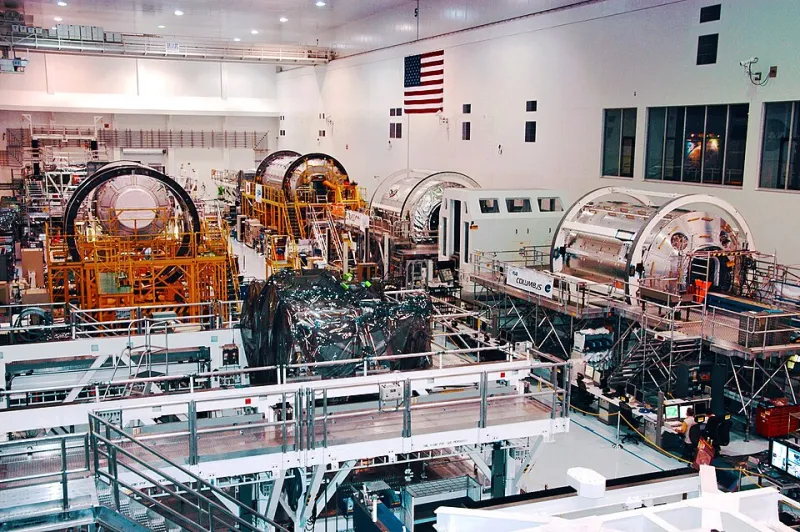
Photo by Photo by Rob Knight on Unsplash on Unsplash
For years, the conventional wisdom held that foreign competitors — particularly those operating out of Asia and Europe — held structural advantages that American mid-market companies simply could not overcome. Lower labor costs, government subsidies, and decades of global supply chain optimization seemed to render the playing field permanently tilted. Yet something has shifted. Quietly, methodically, and with remarkable determination, a cohort of American businesses operating well below the Fortune 500 threshold is reclaiming market share, customer loyalty, and competitive relevance.
These are not the legacy giants with lobbying arms and billion-dollar balance sheets. They are companies with between 50 and 500 employees, annual revenues in the tens to low hundreds of millions, and leadership teams that understand their customers personally. What they lack in scale, they are compensating for with speed, ingenuity, and an increasingly powerful asset: the authenticity of being genuinely American.
The Strategic Advantage of Being Closer to the Customer
One of the most consistent themes among mid-market companies gaining ground on foreign rivals is proximity — not just geographic, but relational. When customers have a problem, they are not navigating a time-zone-shifted call center or waiting days for a translated response. They are speaking directly with people who understand their industry, their region, and often their specific business.
Consider the case of Falcon Precision Components, a machined-parts manufacturer based in Tulsa, Oklahoma. Five years ago, the company was losing bids almost exclusively to Taiwanese and South Korean suppliers who undercut on price. Rather than attempting to match those prices — a race to the bottom the company's leadership refused to run — Falcon invested heavily in rapid prototyping capabilities and a dedicated customer engineering team. The result was a turnaround time on custom components that foreign competitors, with their longer logistics chains, simply could not match. Today, Falcon has recovered contracts representing nearly 30 percent of its prior lost revenue, and its customer retention rate exceeds 91 percent.
"We stopped trying to be the cheapest option in the room," said the company's chief operating officer. "We became the fastest and the most responsive. That's something no overseas supplier can replicate when a production line goes down on a Tuesday morning."
Authentic Branding as a Competitive Moat
The phrase "Made in America" has experienced something of a renaissance, but the businesses benefiting most from it are those treating it as a genuine operational commitment rather than a marketing afterthought. Consumers and corporate buyers alike have grown sophisticated enough to distinguish between performative patriotism and verifiable domestic production.
Ridgeline Outdoor Gear, a Colorado-based manufacturer of professional-grade hiking and camping equipment, spent the better part of a decade watching its market share erode to Chinese-manufactured alternatives sold through major e-commerce platforms at a fraction of the price. The company's response was not a price war — it was radical transparency. Ridgeline began publishing detailed sourcing documentation for every product, including the names and locations of its domestic suppliers, the wages paid to its manufacturing workers, and the environmental standards maintained at its Colorado facility.
The strategy resonated with a segment of the outdoor recreation market that had grown deeply skeptical of opaque global supply chains. Within three years, Ridgeline's direct-to-consumer revenue doubled. More significantly, its average order value increased by 38 percent, indicating that customers were not merely tolerating the premium price point — they were actively seeking it out.
Speed to Market as a Force Multiplier
In industries where product cycles are shortening and consumer preferences shift with increasing velocity, the ability to move quickly from concept to shelf is a decisive advantage. Mid-market American companies, unburdened by the bureaucratic inertia that slows large multinational organizations and unencumbered by the oceanic shipping timelines that constrain foreign manufacturers, are exploiting this window aggressively.
Nashville-based Cornerstone Nutritional, a producer of sports and wellness supplements, found itself squeezed between large domestic incumbents and a wave of low-cost imported products carrying dubious quality certifications. The company's leadership identified a gap: the market for customized, small-batch nutritional formulations aimed at collegiate athletic programs and regional fitness chains was underserved. Foreign suppliers lacked the flexibility to accommodate custom formulations at modest volumes, and large domestic players showed little interest in accounts below a certain revenue threshold.
Cornerstone built its entire operational model around that gap. It invested in flexible manufacturing equipment, developed an in-house regulatory compliance team, and established direct relationships with university athletic departments across the Southeast. The company grew revenue by 44 percent over two years without a single acquisition, sustained entirely by organic demand from customers who valued both the customization capability and the domestic quality assurance that came with it.
The Mindset That Makes the Difference
Beyond the tactical specifics, the companies achieving meaningful competitive recoveries share a philosophical disposition that is worth examining. They have largely rejected the fatalistic narrative that foreign competition is an insurmountable structural force. They treat competition not as a reason for despair but as a clarifying pressure that forces operational excellence and strategic clarity.
Peninsula Electrical Systems, a mid-sized manufacturer of industrial control panels based in Wilmington, North Carolina, offers perhaps the most instructive example of this mindset in practice. When a German competitor with a strong domestic U.S. sales presence began targeting Peninsula's core industrial clients with aggressive pricing and bundled service contracts, Peninsula's leadership convened what they described internally as a "war council" — a cross-functional team charged with identifying every dimension of the competitive relationship and developing a response.
The war council identified that the German firm's service response times in rural and semi-rural industrial markets were consistently slower than advertised. Peninsula restructured its field service team into regional response units, guaranteeing four-hour on-site response times within its core geographic footprint. The guarantee was backed by a contractual service credit. Within eighteen months, Peninsula had recovered seven of the twelve major accounts it had lost and added fourteen new accounts from companies that had previously been with the German competitor.
"We did not try to out-engineer them or out-price them," said Peninsula's president. "We out-served them. And we could do that because we are here. We are American, we are local, and we are not going anywhere."
A Pattern Worth Replicating
The experiences of these companies are not isolated anecdotes. They represent a discernible pattern emerging across American industry: mid-market businesses that compete on dimensions where domestic operation is inherently advantageous — speed, customization, transparency, and relationship depth — are finding that they can not only survive foreign competition but decisively outperform it in the segments that matter most.
For American business leaders willing to resist the temptation of price-driven commoditization and instead invest in the qualities that only a genuinely domestic enterprise can offer, the competitive landscape is more favorable than it has appeared in decades. The foreign rivals are not retreating. But neither are the Americans. And increasingly, the Americans are winning.