Stocked and Ready: How American Manufacturers Are Rejecting Lean Doctrine for Strategic Abundance
For the better part of three decades, the most admired word in American manufacturing was lean. Consultants flew in from every major business school, whiteboards filled with diagrams of streamlined supply chains, and the gospel of just-in-time inventory spread from automotive plants in the Midwest to electronics assemblers on the coasts. The logic was elegant in its simplicity: carry only what you need, when you need it, and let your suppliers absorb the storage burden. Efficiency would be the north star.
Then the world broke.
First came the pandemic-era shortages that left hospitals without basic protective equipment, automakers without semiconductor chips, and consumers without goods they had come to regard as permanent fixtures of daily life. Then came geopolitical friction, port congestion, and the sobering realization that supply chains stretched across a dozen countries and three ocean crossings were not efficient—they were fragile. The lean machine, it turned out, had no shock absorbers.
Now, a deliberate and accelerating rebellion is underway. Across critical sectors of the American economy, manufacturers are consciously rejecting the just-in-time model and replacing it with something that would have been considered wasteful a generation ago: strategic abundance.
The Doctrine That Failed a Nation
Just-in-time manufacturing, refined from Japanese production methods and widely adopted in the United States throughout the 1980s and 1990s, was built on a set of assumptions that seemed reasonable at the time. Global trade would remain stable. Shipping lanes would stay open. Geopolitical partners would remain cooperative. Suppliers would honor their commitments.
Those assumptions aged poorly.
When COVID-19 disrupted global logistics in early 2020, American manufacturers discovered that their elegant, optimized supply chains had no redundancy. A single missing component—a $0.50 microchip, a specialized valve, a specific grade of steel—could halt an entire production line. Companies that had prided themselves on carrying zero excess inventory suddenly had nothing to offer their customers. The competitive advantage of lean had quietly become a national vulnerability.
The consequences were not merely financial. In critical industries—defense, pharmaceuticals, medical devices, and agricultural equipment—the inability to surge production when demand spiked revealed a structural weakness in American industrial capacity. Efficiency, pursued without restraint, had traded resilience for optimization.
Building Buffers as a Business Strategy
What makes the current shift remarkable is not simply that companies are holding more inventory. It is that they are doing so deliberately, strategically, and without apology.
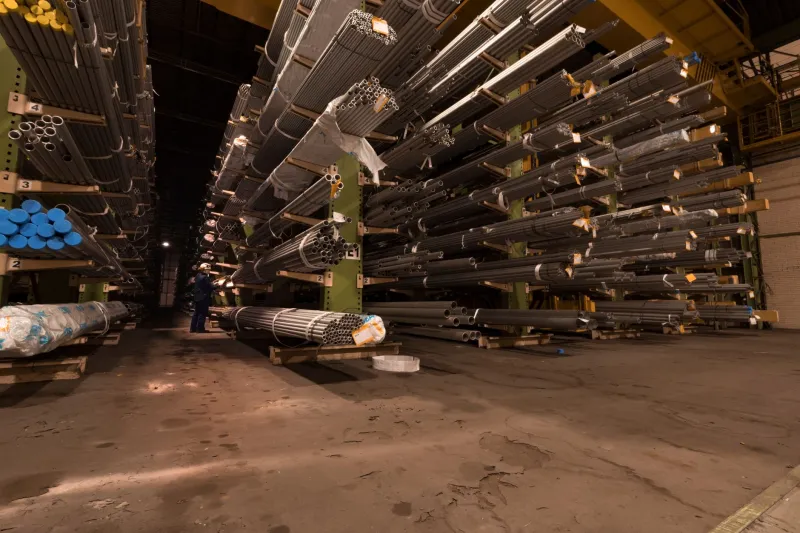
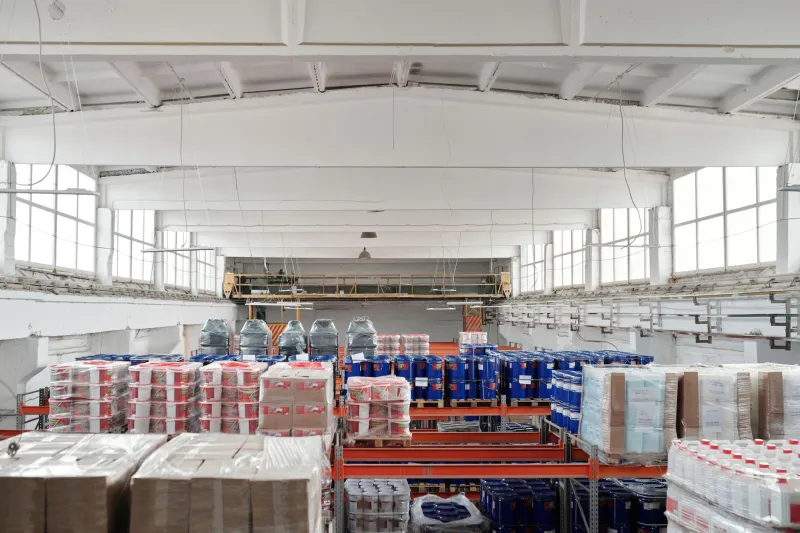
Manufacturers in sectors ranging from industrial tooling to specialty chemicals are now engineering what some executives have taken to calling strategic buffers—predetermined stockpiles of raw materials, intermediate components, and finished goods calculated not to minimize carrying costs but to guarantee uninterrupted delivery to customers regardless of external disruption.
This is a profound reorientation of priorities. Under lean doctrine, inventory was a cost to be minimized. Under the new model, inventory is an asset to be managed—a form of insurance that commands a premium from customers who have themselves been burned by supply chain failures.
The economics, counterintuitively, often work in favor of the abundant model. Manufacturers who can guarantee delivery windows are commanding higher prices and deeper customer loyalty than competitors who offer lower unit costs but unpredictable availability. In industrial markets especially, a trusted domestic supplier who ships on time, every time, is worth considerably more than the cheapest option on a global procurement list.
Critical Industries Leading the Charge
The shift toward strategic abundance is most visible—and most consequential—in industries where supply disruption carries consequences beyond lost revenue.
In defense manufacturing, the calculus is straightforward. A weapons system that cannot be produced at scale during a period of elevated national security need is not a defense asset—it is a liability. American defense contractors and their domestic suppliers have begun treating production capacity as a form of deterrence, maintaining the tooling, workforce, and material reserves necessary to surge output when the nation demands it.
In pharmaceutical manufacturing, the lesson was learned painfully during the pandemic, when dependence on overseas active pharmaceutical ingredient production left American patients and healthcare providers exposed. A wave of domestic investment in drug manufacturing capacity—much of it supported by a growing understanding that national health security requires domestic production—has brought with it a corresponding emphasis on maintaining raw material reserves that can sustain production through extended supply disruptions.
Agricultural equipment manufacturers, long accustomed to the seasonal demand spikes that accompany planting and harvest cycles, have extended the logic further. Farmers cannot wait for a replacement part to arrive on a slow boat when a combine is sitting idle during a three-week harvest window. Domestic manufacturers who maintain regional parts depots stocked with high-demand components are capturing market share from foreign competitors whose logistics simply cannot match the responsiveness of a company with warehouses in the American heartland.
Sovereignty as a Selling Point
There is a dimension to this movement that transcends pure business logic, and American manufacturers are increasingly willing to name it plainly: sovereignty.
A nation that cannot produce its own critical goods—that cannot manufacture the equipment, medicines, and materials its economy and defense require—is not fully sovereign. It is dependent. And dependence, as recent years have demonstrated with uncomfortable clarity, is a vulnerability that adversaries are willing to exploit.
The manufacturers who are building strategic stockpiles and expanding domestic production capacity are not merely making a business decision. They are making a statement about what kind of industrial nation America intends to be. They are betting that American customers—both commercial and government—will increasingly reward the supplier who can deliver from American soil, from American workers, without requiring a favorable wind from a foreign port.
That bet is looking increasingly well-placed. Federal procurement policies have shifted meaningfully toward domestic sourcing requirements. Corporate procurement officers, once laser-focused on unit cost, are now measured in part on supply chain resilience. And American consumers, particularly in the business-to-business space, have demonstrated a willingness to pay a premium for the certainty that comes with a domestic partner who carries the inventory to back up its promises.
A New Definition of Efficiency
The manufacturers leading this rebellion are not abandoning discipline. They are redefining it.
Efficiency, in the new model, is not measured solely by inventory turns or carrying cost ratios. It is measured by the ability to serve customers without interruption, to respond to surges in demand without scrambling, and to sustain operations through disruptions that would cripple a leaner competitor. A company that carries ninety days of critical raw material inventory and never misses a shipment is more efficient, in the ways that matter, than one that carries thirty days and spends its management bandwidth managing crises.
This is the deeper insight driving the rebellion against just-in-time: resilience is not the opposite of efficiency. It is a higher form of it.
American manufacturers who grasp that distinction are not simply building stockpiles. They are building the foundation of a more durable, more sovereign, and ultimately more competitive industrial base—one that is designed not merely to function when conditions are favorable, but to deliver when conditions are not.
In the long history of American industry, that capacity to perform under pressure has never been a liability. It has always been the point.